Resilient Futures Design
"Good design must stay flexible, anticipate change, and be grounded in human values."
The Objective
The world is changing, and traditional problem-solving methods are no longer sufficient for today's complex challenges. Resilient Futures is a strategic framework designed to help designers create products that respond to current needs, anticipate future shifts, and remain rooted in enduring human values.
A Three-Pillar Framework
We brought together three core methodologies into one cohesive framework:
- Adaptive Design: Ensuring solutions can flex and evolve as environments change.
- Speculative & Critical Design: Challenging assumptions and exploring "What if" scenarios to prepare for disruptive futures.
- Value-Driven Design: Centering human needs and ethics through the TIPSS framework (Transparency, Inclusion, Privacy, Security, Safety).
The 7-Step Innovation Journey
The playbook guides designers through a rigorous 7-step process: from initial discovery and community co-design to futures thinking, value alignment, and sustainable scaling.
Case Study: Recreational Boating
We applied the framework to the maritime industry, asking: "How might we make recreational boating more inclusive and accessible?"
By using the Value Adaptive Scenario (VAS) Canvas, we identified unintentional barriers like financial exclusivity and physical accessibility. The resulting solution—the Floating Community Docks Program—is a network of mobile, modular docks designed to rotate through underserved coastal communities, offering sliding-scale rentals and inclusive training.
Case Study: Gaming Well-Being
We also explored the gaming industry, designing an Integrated AI Game Coach. This project utilized the TIPSS radar chart to balance teen autonomy with digital safety, creating dynamic game modes that adapt in real-time to a player's emotional state and cognitive load.
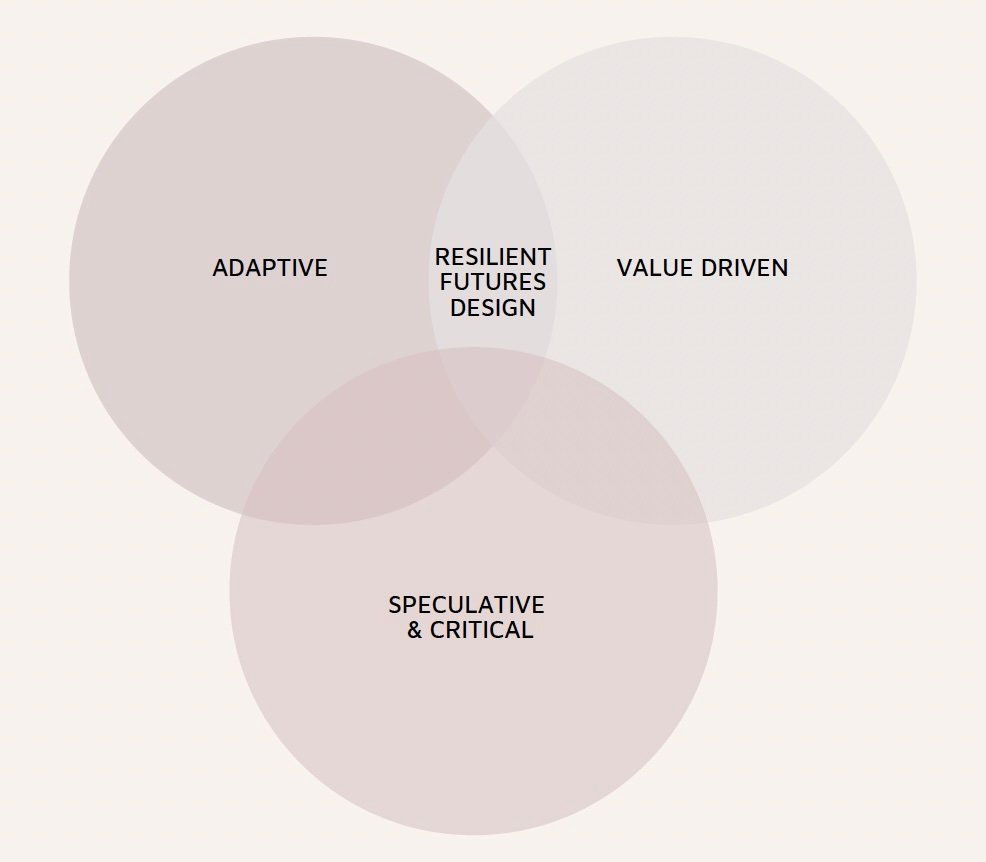
The intersection of the three core pillars of Resilient Futures Design.
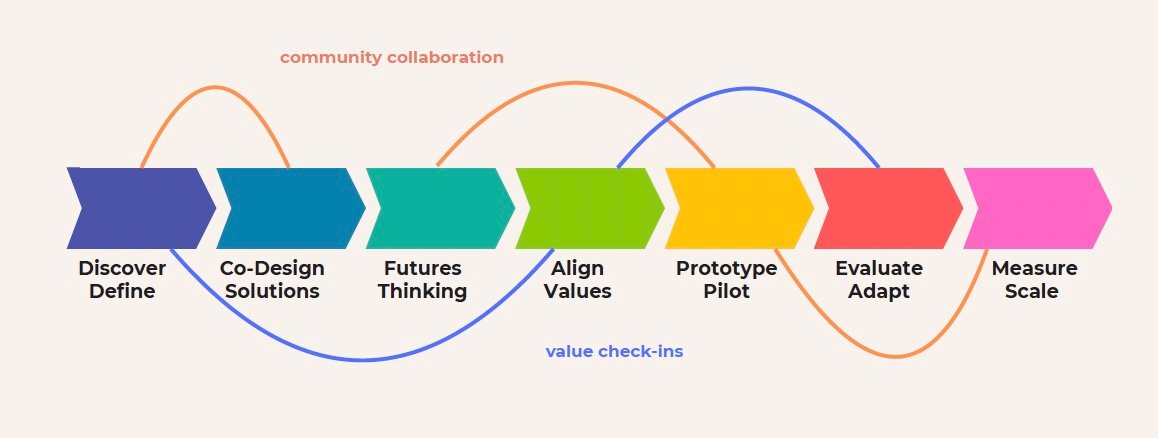
7 Step Iterative Process
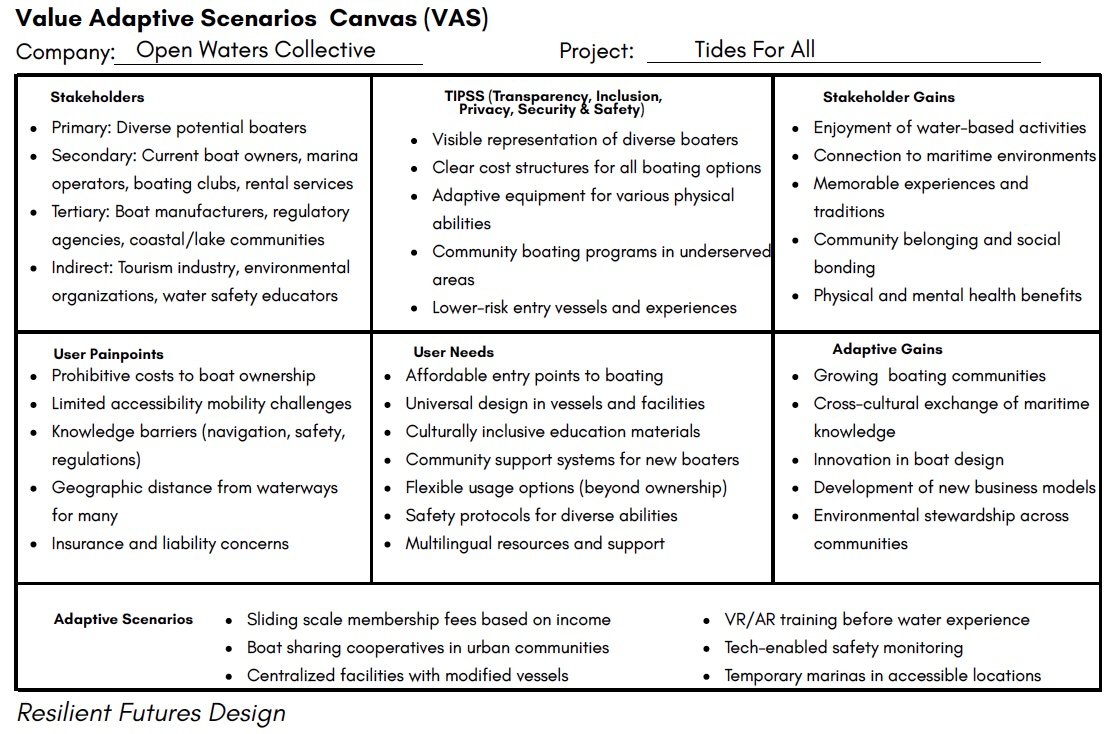
The VAS Canvas: Identifying stakeholders, pain points, and adaptive scenarios.
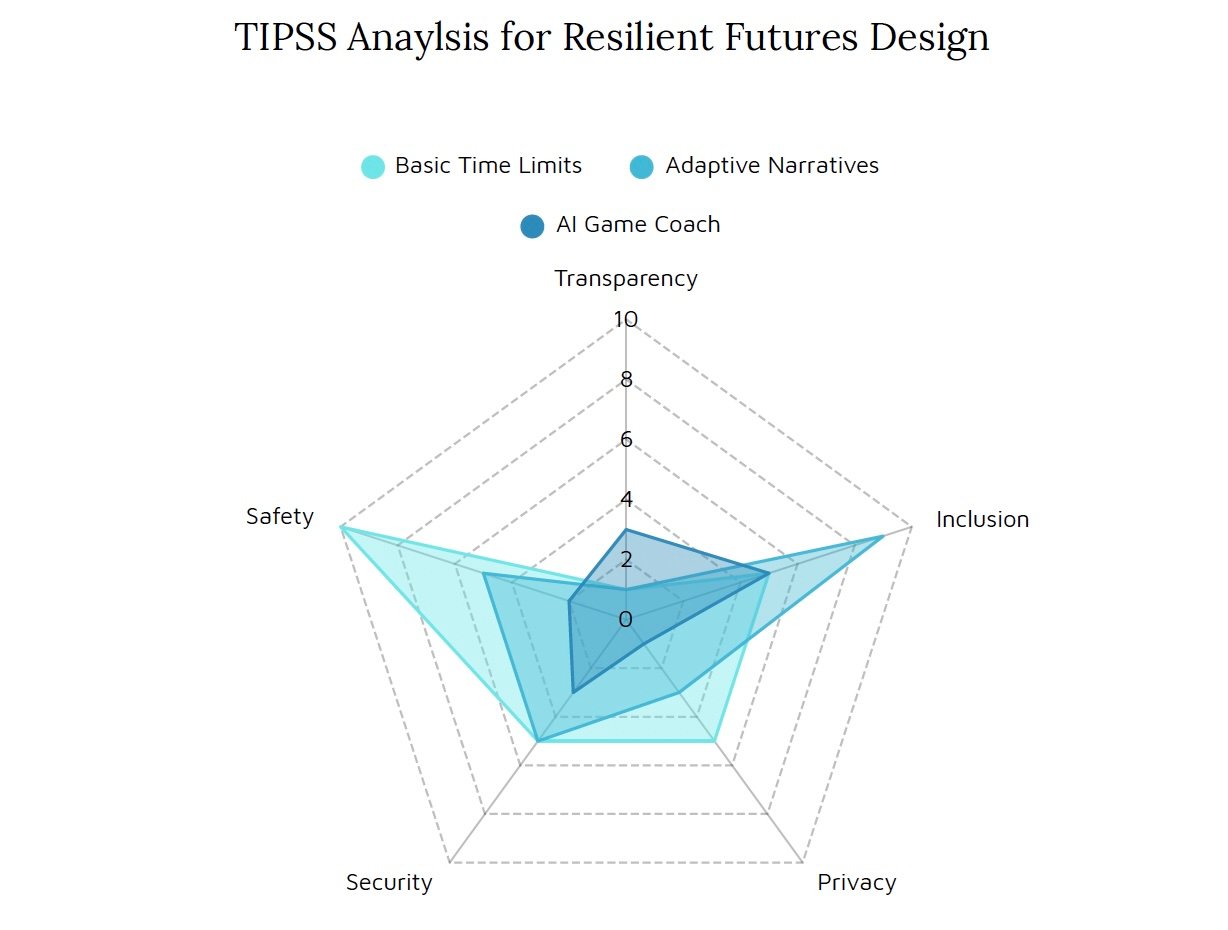
TIPSS Analysis: Measuring Transparency, Inclusion, Privacy, Security, and Safety.